What to include on an invoice
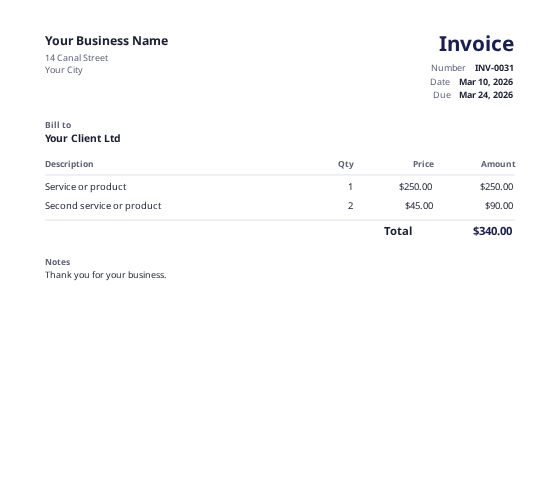
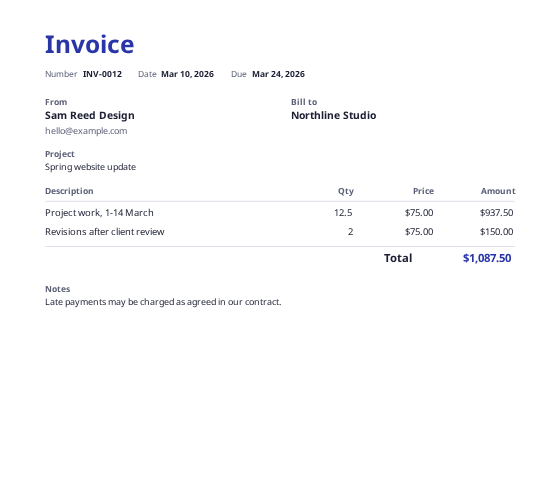
A good invoice tells your client who it is from, what it is for, how much to pay, by when, and how. Most delays come from one of those being unclear. Here is what to include, and why.
The basics
- The word “Invoice”, so it is not mistaken for a quote
- Your business name and how to contact you
- Your client’s name and address
- A unique invoice number
- The date of the invoice
- The date payment is due
- What you did or sold, with quantity and price
- The total to pay
- How to pay you
Why the small details matter
Larger clients often pay through an accounts team who were not part of the work. If the invoice does not say which job it is for, it may sit in a queue until someone asks. A purchase order number or project name, when the client gave you one, helps it move quickly.
The payment details are the part people most often forget. If your client has to ask how to pay, you lose days. Put your bank details or payment link on every invoice.
A due date works better than “payable on receipt” or nothing at all, because it gives your client something to plan around, and gives you a clear day to follow up.
Tax details
Whether you need to show a tax number or charge tax depends on your country and whether you are registered. Many small businesses are not registered, and then neither is needed. Check the rules that apply to you, or ask an accountant. This guide is general information, not tax advice.
Questions
Do I have to include my address?
It depends on where you are. Many countries expect a business name and address on invoices. If in doubt, include it.
Can I send an invoice as a PDF?
Yes. A PDF is the most common way, because it looks the same on every device and is hard to change by accident.
Checked on .