Quote or estimate: what is the difference?
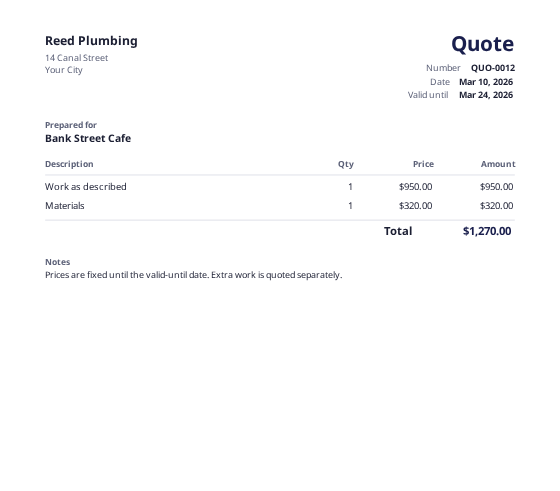
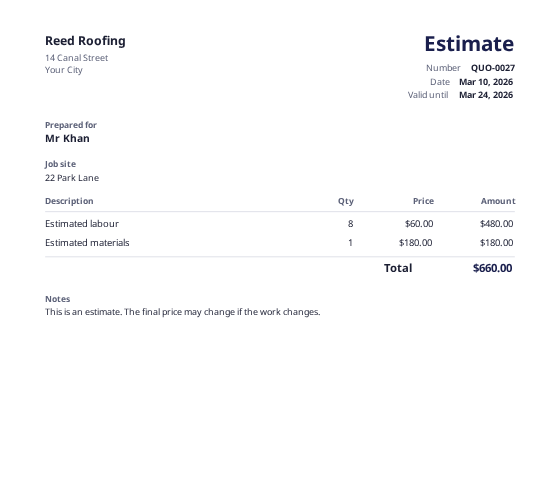
A quote is usually a fixed price for a defined job. An estimate is your best guess, and the final price may change. Choosing the right one, and saying so clearly, prevents most arguments about the bill.
Use a quote when you know the job
If you can see the whole job and your costs are known, give a quote. Say exactly what is included and how long the price is valid. The customer knows what they will pay, and you know what you have agreed to do.
Use an estimate when you cannot be sure
If there is a chance of hidden work, give an estimate. Say what could change the price. For example: “This assumes the existing pipework is sound. If it needs replacing, I will tell you the cost before going ahead.”
Say which one it is
The word at the top of the page matters. People tend to treat any number you give them as a promise, so call it what it is, and put your assumptions in writing.
When the job changes, tell the customer before you do the extra work, and keep a note of what they agreed. A short message at the time saves a long argument at the end.
Questions
Is a quote legally binding?
That depends on where you are and what was agreed, so ask a professional if it matters. As a rule, treat any accepted quote as something you must honour.
Should I charge for quotes?
Most small jobs are quoted for free. For large or complicated jobs, some businesses charge and take the fee off the final bill.
Checked on .